Deer Season Prep: How to Avoid Back Injuries Hauling Tree Stands and Gear
West Virginia's archery and crossbow deer season opens on the last Saturday in September, which is September 26 this year. For hunters across Jefferson and Berkeley County, that means the next two weeks are spent dragging climbing stands up ridgelines, hanging sets on the Blue Ridge, and hauling packs of gear before daylight. It also means hunters with sore backs start showing up at Limitless Physical Therapy in Kearneysville a few weeks later. Most of those injuries are preventable with a little preparation now.
Why do hunters hurt their backs during deer season?
Hunters hurt their backs because deer season asks the body to do heavy, awkward work it has not practiced since last fall. A climbing stand weighs 15 to 25 pounds, a hang-on stand with sticks runs another 15 to 20, and a loaded pack with a bow or crossbow, water, layers, and a harness adds 20 pounds or more. Carrying that load uphill, in the dark, on uneven ground, is a strength and balance task. Most people spend the summer sitting at a desk or driving, then do it cold.
Four movements cause most of the injuries we treat:
- Lifting a stand off the truck bed or out of the garage: a bent-over, rounded-back lift with the load far from the body is the single most common way a hunter strains a lumbar disc or facet joint.
- Carrying a stand on your back for a long walk: a poorly fitted pack or stand harness pulls the shoulders back and the low back into extension. After 30 minutes the small muscles along the spine fatigue and start complaining.
- Twisting to hang or climb: reaching around a tree to ratchet a strap, or pushing a climber up while twisted at the waist, loads the spine in rotation, which is when discs are least protected.
- Dragging a deer: a field-dressed West Virginia buck can weigh well over 100 pounds. Dragging one downhill with one arm, over rocks and deadfall, after sitting still in the cold for four hours, is the finishing move for a lot of back injuries.
What kind of back injury do hunters usually get?
The most common hunting back injury is a lumbar muscle strain, followed by disc irritation that sends pain into the buttock or leg. A muscle strain feels like a tight band across the low back that gets worse with bending and better with gentle walking. It usually settles in one to three weeks with the right movement and hands-on care.
Disc irritation is different. If you feel pain running down the back of one leg, numbness in the foot, or a sharp catch when you cough or sneeze, the nerve root is involved. This is the sciatica pattern we see after a bad lift or a long drag. It responds well to physical therapy, but it takes longer, and it gets worse if you push through it for the rest of the season. Our back pain and sciatica page covers how we sort out which one you have.
Shoulder strains from hauling a climber up a tree, and knee or ankle sprains from a slip on wet leaves, show up in the same weeks. Those need a different plan, and we treat them too.
How do I lift and carry a tree stand without hurting my back?
Lift with the load close to your body, your spine in a neutral position, and the power coming from your hips and legs. That covers most of it. The specifics:
- Get the stand to hip height before you lift it. Slide it to the edge of the tailgate or set it on a bench first. Lifting from the ground with a rounded back is where most strains start.
- Hinge at the hips, not the waist. Push your hips back like you are closing a car door with your backside, keep your chest up, and stand by driving through your heels. This is the same hip hinge we teach every patient who deadlifts, and it works for a stand just as well as a barbell.
- Turn your feet, not your spine. When you need to face a different direction with the stand in your hands, step and pivot. Never twist through the low back under load.
- Fit the pack or harness before the walk. Tighten the hip belt so the weight sits on your pelvis, not your shoulders. Shoulder straps should be snug but not carrying the load. A stand riding low and loose on your back is a back strain waiting for a stumble.
- Take breaks on long walks in. Set the stand down every 15 to 20 minutes, walk around for a minute, and reset your posture. Fatigued spinal muscles are the ones that get hurt.
For the drag out, use a deer drag harness or a rope around your chest so both hands are free and the load pulls from your center. Drag in short pulls with a straight back, and stop before you are exhausted, not after. If you have a partner, alternate. If you have a cart or a sled, use it. Dragging a buck downhill by one antler is how a good morning turns into six weeks of physical therapy.
What can I do in the next two weeks to get ready for opening day?
Two weeks is enough time to wake up the muscles that protect your back, as long as you start now. Do this three or four times a week between now and September 26:
- Hip hinges with a light load: 3 sets of 10 with a kettlebell, a dumbbell, or your actual pack. Practice the exact pattern you will use on the tailgate.
- Loaded carries: put on your pack with the weight you will actually carry and walk 10 minutes on uneven ground. Add a few minutes each session. Hills count double.
- Step-ups: 3 sets of 10 per leg onto a sturdy box or stair. This builds the single-leg strength that keeps you upright when a foot slips on the climb.
- Bird dogs and side planks: 2 sets of 10 bird dogs and 2 sets of 20 to 30 seconds per side on the plank. These train the deep core muscles that hold the spine steady while your arms and legs work.
- Practice the setup in daylight: hang your stand in the backyard once. Work out the ratchet straps, the climbing sticks, and your harness clip with good light and no pressure. The first time you do it should not be at 5:30 a.m. on opening morning.
If you already have a nagging back, start lighter and shorter than this. A little soreness the next day is fine. Sharp pain during the movement means stop and get it checked before the season, not after.
When should a hunter see a physical therapist for back pain?
See a physical therapist if back pain lasts more than a few days, travels into the leg, or changes how you walk, sleep, or sit. You do not need to wait for it to get bad. In West Virginia you also do not need a referral to start physical therapy, so you can call directly the day it happens.
Get seen right away, not in a week, if you notice any of the following after a lift or a fall: numbness in the groin, new trouble controlling your bladder or bowel, weakness in one foot, or pain so severe you cannot stand. Those are signs the nerve is under real pressure and they need urgent evaluation.
A back strain treated in the first week usually keeps a hunter in the woods for the rest of the season. The same strain ignored for six weeks, with more stand carries and a drag on top of it, can cost you the rifle opener in November too.
How does Limitless Physical Therapy treat a hunting back injury?
Every visit at Limitless is a full one-on-one session with a doctor of physical therapy, and the plan is built around getting you back in the stand. For a back injury that usually means three things in the same session:
- Hands-on manual therapy to reduce muscle guarding and restore motion in the stiff segments of the spine and hips.
- Dry needling for the trigger points in the low back, glutes, and hips that lock up after a strain. Many patients notice less tightness after the first session.
- Loaded strength work that rebuilds the hinge, the carry, and the single-leg control, using weights that match what you will actually lift and carry in the woods.
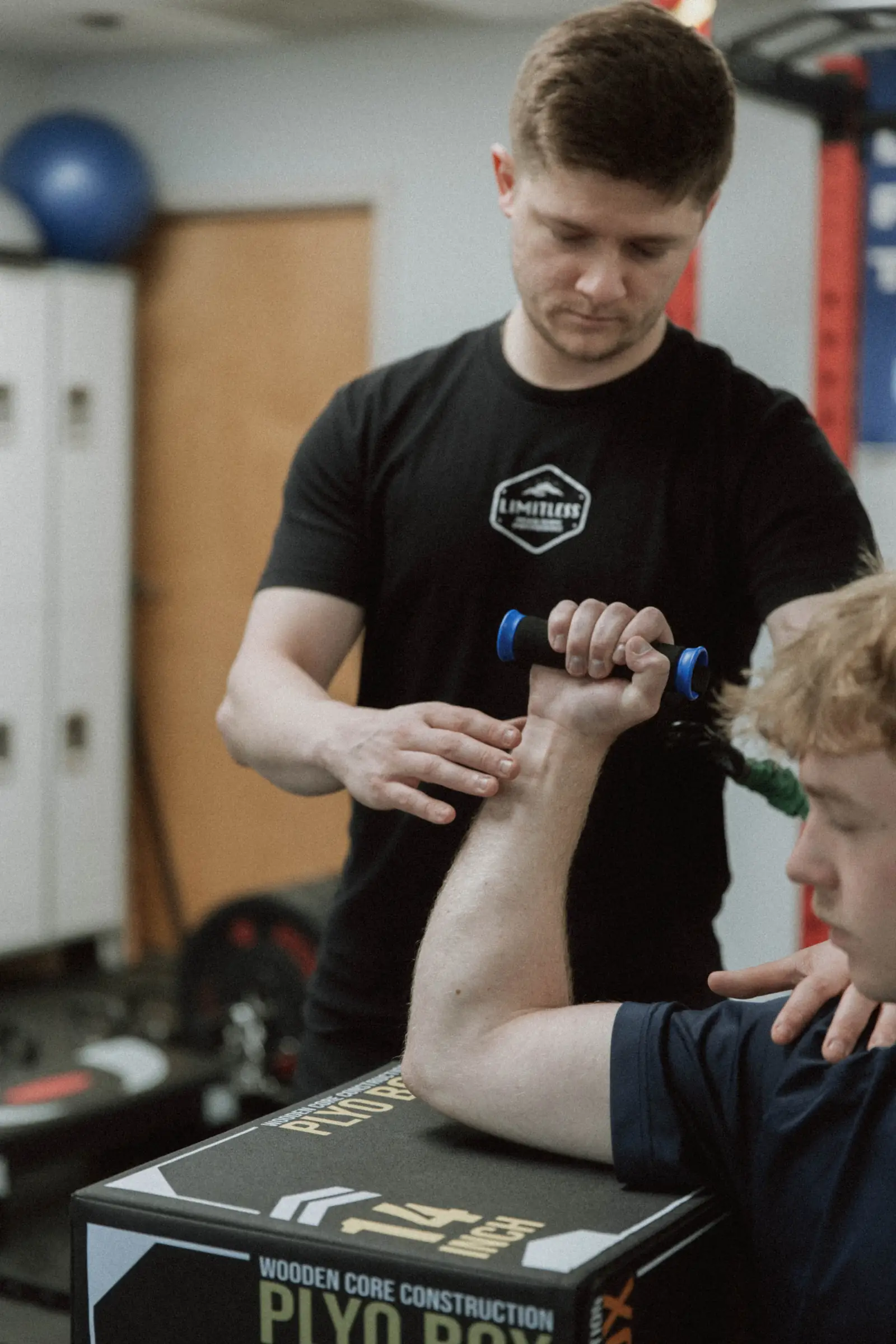
We also look at the setup itself. If your stand harness, your pack fit, or your climbing routine is loading your back the wrong way, we fix that in the clinic before you head back out. Our clinic in Kearneysville sits a short drive from Martinsburg, Charles Town, Shepherdstown, and the Sleepy Creek and Shenandoah River hunting areas most of our patients use, so a visit fits between a morning sit and an evening hunt.
If your back is already talking to you, or you want a plan to make sure it stays quiet through December, request an appointment or call 304-407-4159. No referral needed.