Physical Therapy vs. Chiropractic for Back Pain: An Honest Comparison
If your lower back has been aching for weeks, you have probably heard both recommendations from friends: see a physical therapist, or see a chiropractor. Both are licensed, both treat back pain, and both are covered by most insurance plans in the Eastern Panhandle. They are not the same service, and the difference matters when you are deciding where to spend your first appointment.
What is the difference between physical therapy and chiropractic care for back pain?
Physical therapy treats back pain by changing how your body moves and loads the spine; chiropractic care treats it primarily through spinal adjustment, or manipulation, of restricted joints. A physical therapist evaluates hip mobility, core and glute strength, walking mechanics, and the positions that provoke your symptoms, then builds a progressive exercise plan around what the exam found. A chiropractor evaluates spinal alignment and joint restriction and delivers a manual thrust to the segment involved.
The overlap is real. Physical therapists trained in manual therapy also use joint mobilization and manipulation, and many chiropractors prescribe exercise. The practical distinction is emphasis: PT is built around progressive loading you keep doing after discharge, chiropractic is built around a manual correction delivered in the office.
Which one works better for low back pain?
For most non-specific low back pain, the research supports both, and the guidelines list them side by side. The American College of Physicians 2017 clinical guideline for low back pain recommends non-drug treatment first, and names exercise therapy, spinal manipulation, massage, heat, and acupuncture among the options. Neither profession has a monopoly on the evidence.
Where they separate is on what happens after the pain settles. Manipulation is effective at reducing pain and restoring motion in the short term. Loaded exercise is what changes the tissue capacity that made you vulnerable in the first place. If your back pain keeps coming back every few months, the recurring part is usually a strength and movement problem, not an alignment problem.
How do I know which one I need?
Match the choice to the pattern of your symptoms.
- Sudden stiffness, a locked-up feeling, limited rotation: either provider can restore that motion quickly. Manual work is the fast lever.
- Pain that recurs every few months, or comes back whenever you lift, run, or sit long: physical therapy. The recurrence is a load-tolerance problem, and exercise is the treatment that raises tolerance.
- Radiating pain down the buttock, thigh, or leg with numbness or tingling: get evaluated by a provider who screens neurologically before any treatment. Sciatic symptoms need a nerve exam, not just a technique.
- Post-surgical spine, or back pain plus a strength deficit you can feel: physical therapy, because rehab progression is the whole job.
- Back pain that limits a sport or a job task: physical therapy, because return-to-activity testing is part of the plan.
Seeing both is also a normal path. Plenty of patients get adjusted and do rehab in the same month.
Do I need a referral to see a physical therapist in West Virginia?
No. West Virginia has direct access, so you can be evaluated by a licensed physical therapist without a physician referral. That removes the extra doctor visit that used to sit between an aching back and a treatment plan. We covered the specifics in our guide to direct access physical therapy in West Virginia.
Insurance is a separate question from licensure. Some plans still ask for a referral for coverage even though state law does not require one for care, so call the number on your card or ask us to check before your first visit.
What does a first back pain visit at Limitless actually look like?
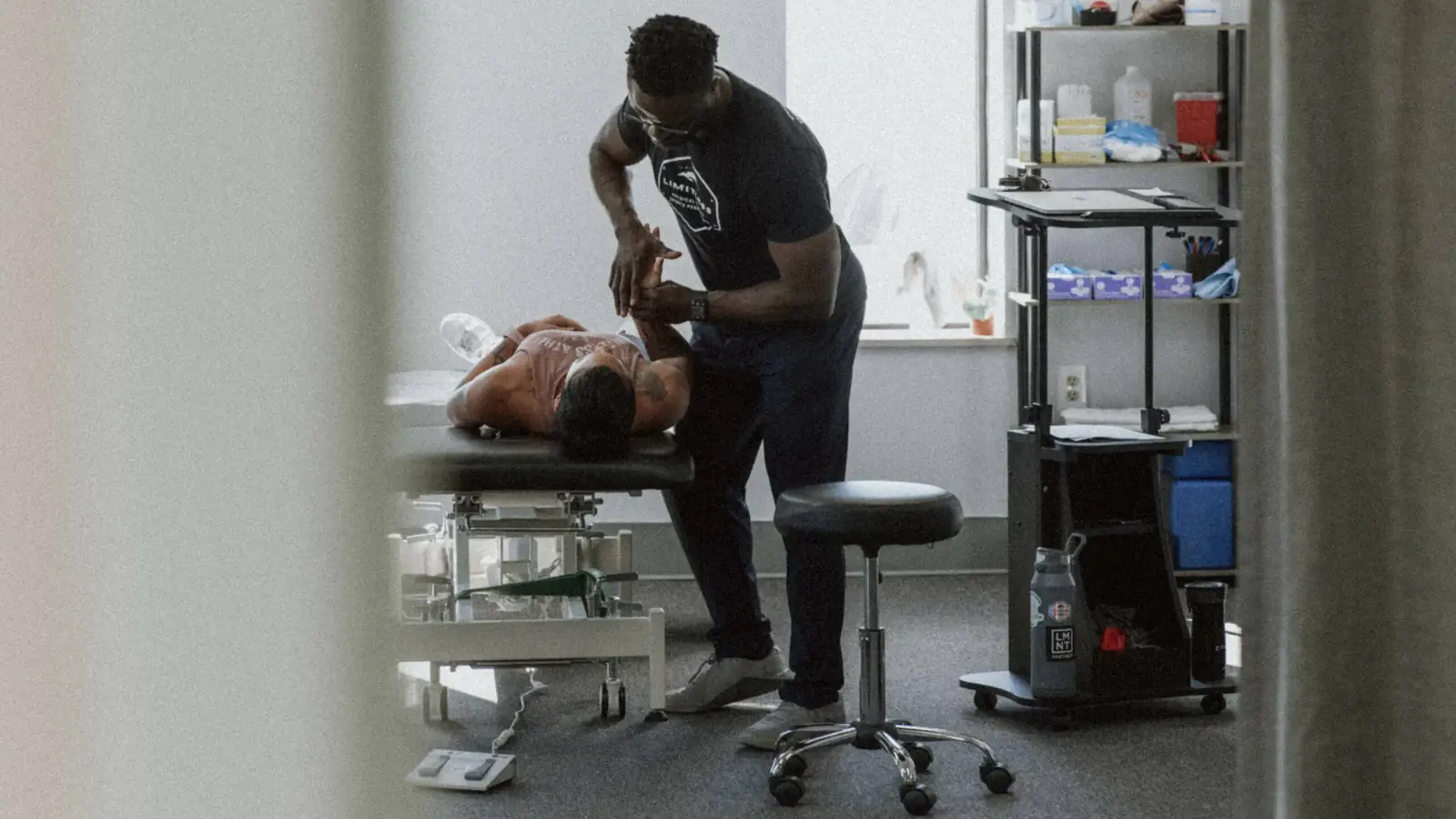
A full evaluation with one physical therapist, one on one, for the whole session. No handoff to an aide halfway through. The therapist screens for red flags and nerve involvement, tests hip and thoracic mobility, checks how you hinge and squat, and identifies the positions that reproduce your pain. You leave with a working diagnosis, two or three exercises to start that day, and a plan you understand.
From there, treatment for back pain and sciatica usually blends early pain relief with progressive strengthening. Hands-on manual therapy and dry needling calm the guarded tissue so you can move; core and hip strengthening, hinge mechanics, and ergonomic changes keep it from returning. Outcomes vary by person, which is why the plan gets adjusted at every visit rather than run off a protocol.
How long does physical therapy for back pain take?
Most straightforward low back cases involve one to two visits per week for four to eight weeks, with home exercise in between. Symptom relief often shows up earlier than that. The later visits are the ones that build the strength that prevents the next episode, which is the part patients are most tempted to skip.
Frequency is not fixed. A desk worker with a first flare-up and a masters runner with a five-year history of the same complaint get different schedules.
Where can I see a physical therapist for back pain near Martinsburg?
Limitless Physical Therapy is at 362 W Burr Blvd, Suites 5-6 in Kearneysville, roughly ten minutes from Martinsburg and Charles Town and a short drive from Ranson, Shepherdstown, and Inwood. Appointments run Monday through Thursday until 7:00 PM and Friday from 7:00 AM, so a session fits around a shift or a school day.
If your back has been bothering you for more than a couple of weeks, or the same episode keeps returning, book an evaluation at limitlessptwv.com or call 304-407-4159. An hour with a therapist is the fastest way to find out what is driving it.